7 Best Website Conversion Optimization Tools (2026)
If you run a website, you know how hard it can be to get visitors to do what you want.
You invest your time to create content, manage social media, and even pay for ads. But then you look at your website traffic numbers and see that many people visit but don’t sign up or buy anything.
This is the most common hurdle for any online business, and it’s where the real work begins.
The good news is you don’t need to guess what stops people.
Website conversion optimization tools help you see your website through your visitors eyes, so you can observe what they click and where they leave.
With the right tools, you make decisions on actual visitor behavior and measurable outcomes. That means you can:
- Make changes that actually work.
- Spend time on solutions that matter.
- Improve your conversions predictably.
This guide lists the best tools for handling these tasks without stress. We focus on solutions that provide easy-to-read dashboards and straightforward insights, so you spend less time learning software and more time improving your pages.
Let’s get started.
What Are Conversion Rate Optimization Tools?
Website conversion optimization tools are software solutions that help you improve the percentage of your website visitors who complete a desired action.
This action is your conversion, which could be a purchase, a sign-up, a download, or any other key goal.
The main objective of CRO is to increase the value you get from your existing traffic. If you can convert 2% of your visitors into customers instead of 1%, you will have effectively doubled the output of your marketing efforts without spending a single extra dollar on advertising.
CRO tools generally fall into a few main categories, each with useful features that help you improve your website’s performance.
- Funnel and Journey Analysis: Tools like Vemetric help you identify where in a multi-step process (like a checkout) you are losing people.
- User Behavior Analytics: You can see how people interact with your pages, revealing website engagement and drop-off points.
- A/B and Multivariate Testing Tools: They allow you to experiment and test different versions of a page (like changing a headline, button color, or entire layout), measuring which version drives more conversions.
- Feedback and Survey Tools: These tools let you ask direct questions to your visitors as they make a decision.
Top 7 Conversion Rate Optimization Tools
Choosing the right analytics tool is critical for increasing conversions and achieving long-term growth.
Here are some of the best CRO tools, along with their key features, pros, cons, and pricing, to help you save time and quickly make the difficult process of conversion optimization more manageable.
Vemetric
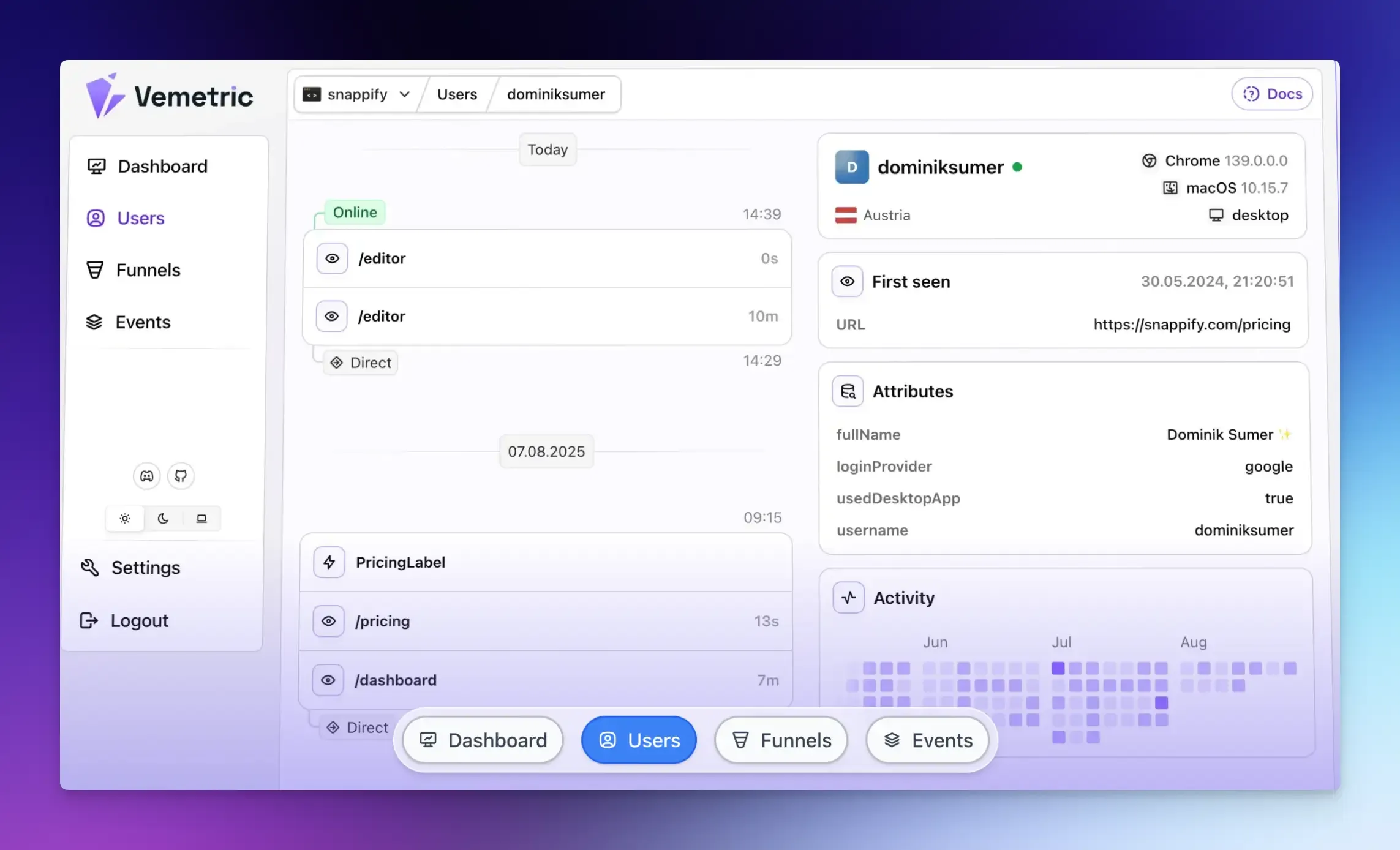
Vemetric is a privacy-focused, open-source analytics platform that helps you optimize conversions by showing where and why potential customers drop off along their journey.
Instead of guessing, you get data on the specific steps where users lose interest or encounter problems so that you can fix those issues.
Vemetric helps you:
- Collect user behavior data from your website or product.
- Track how visitors move from one page or event to another.
- See which paths lead to conversions and which have high drop-off rates.
- Use this data to focus your optimization efforts on the weakest steps.
Best for: Websites and SaaS product owners who need detailed visitor behavior data to boost conversion rates.
Key Features:
- Privacy-first tracking without cookies by default, making your usage compliant with strict privacy laws, especially in the EU.
- Web analytics and event tracking with key metrics like page views, top landing pages, referral sources, and custom events that you define yourself.
- User journey tracking to see how individual users interact with your site over time.
- Funnel analysis helps you identify drop-off points and steps that block conversions so you can work on fixing them.
- Event streams show a chronological list of events happening on your site as they occur, letting you monitor activity in real time and apply filters to focus on specific user segments or actions.
- Easy integration using a script tag or SDK for various frameworks.
Pros:
- Cookieless tracking and fully GDPR compliant.
- Open-source code for transparency.
- Unified web and product analytics in one tool.
Cons:
- Newer platform with some features and a self-hosted community edition in development.
Pricing:
- Free plan available.
- Paid plans start from $5/month.
VWO (Visual Website Optimizer)
VWO is an all-in-one CRO platform that provides tools for testing changes, understanding user behavior, and delivering personalized experiences.
It allows you to deliver different content for specific audience segments automatically. For example, you could show a special promotion to first-time visitors or display enterprise software features to users from large companies.
This makes it very useful to test in-app user experience and feature adoption. Based on the results, you can make changes to your website using the built-in visual editor and include custom widgets or drag-and-drop templates to create unique experiences for your visitors.
Best for: SaaS and software companies that need testing, analytics, and insights all in one place.
Key Features:
- A drag-and-drop editor to create dynamic user experiences.
- A/B, multivariate, and split URL testing.
- Heatmaps, session recordings, and form analytics.
- Advanced targeting and segmentation.
- Integrations with analytics and marketing tools.
Pros:
- Comprehensive set of optimization tools.
- Enterprise-level experimentation.
- High performance and reliable data.
Cons:
- Steeper learning curve for new users.
- It can be costly for small businesses.
Pricing: Custom enterprise pricing.
Optimizely
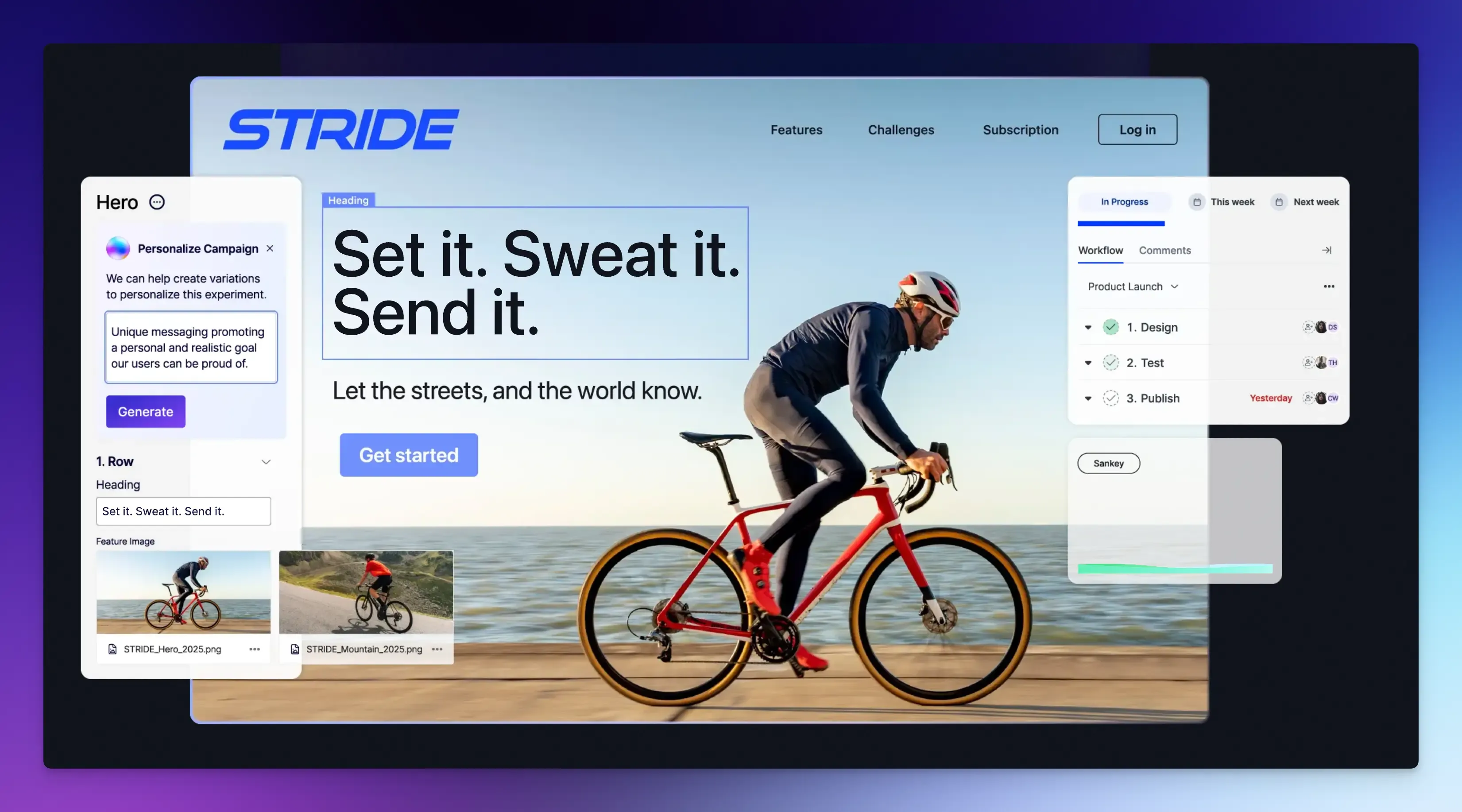
Optimizely is a full-featured digital experience platform for enterprise-grade optimization. It goes beyond simple A/B testing to help businesses improve website conversions through experimentation, personalization, and content management.
Best for: Large companies with complex testing needs across web, apps, and backend systems.
Key Features:
- A/B and multivariate testing tools
- Product, website, and customer journey analytics.
- Feature flags and staged rollouts.
- Content management and commerce tools.
- Advanced personalization for targeted experiences.
Pros:
- Powerful experimentation and optimization tools.
- Deep integration capabilities for high-traffic sites.
Cons:
- Expensive for small businesses.
- Needs technical expertise to use fully.
Pricing: Custom, quote-based enterprise pricing.
Hotjar
Hotjar is a leading CRO tool for deep behavioral analytics and user feedback.
Unlike VWO and Optimizely, which test new changes, Hotjar helps you identify which changes to test. You can watch where users struggle and ask them direct questions to understand their thinking.
Best for: Businesses that want to understand why visitors behave the way they do.
Key Features:
- Heatmaps showing clicks, scrolls, and hovers.
- Session replays to watch real user actions.
- Feedback tools, surveys, and live interviews.
- Conversion funnel tracking.
Pros:
- Qualitative data that shows visitor behavior at a glance.
- Quick setup and easy to use.
Cons:
- A/B testing capabilities are limited.
- Some reporting features are basic compared to those in full CRO suites.
Pricing:
- Free plan available.
- Paid plans start from $40 per month.
Personizely
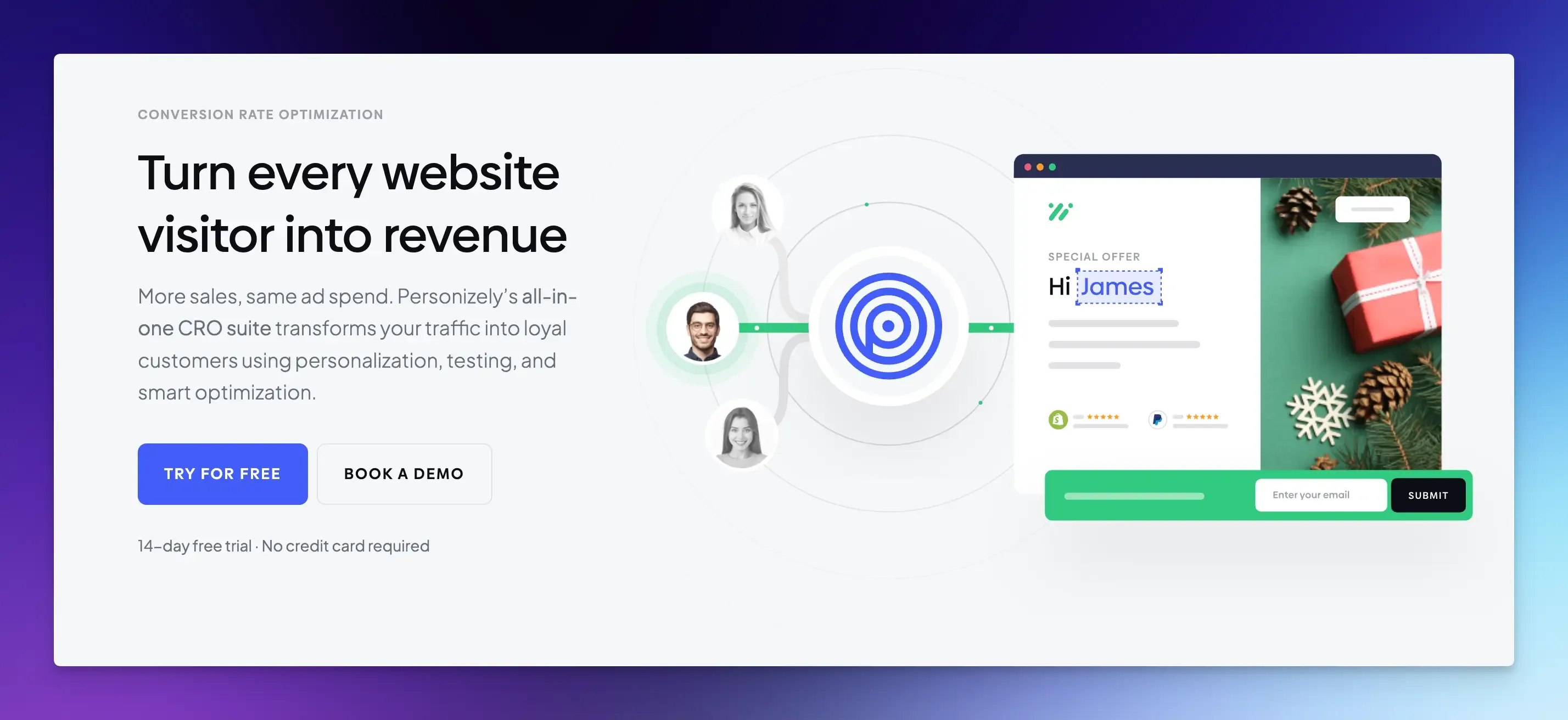
Personizely is another all-in-one platform for conversion rate optimization. It is a simpler, more affordable alternative to complex enterprise platforms, combining tools for A/B testing, website personalization, and marketing widgets into a single interface.
Best for: Small to medium businesses and ecommerce brands that want a powerful optimization tool.
Key Features:
- User-friendly widget builder for popups, banners, and forms.
- Targeted customer experiences based on behavior.
- A/B testing for content and pricing variants.
Pros:
- Easy for non-technical teams.
- Works with major platforms like Shopify, WordPress, and HubSpot.
Cons:
- Lacks advanced multivariate testing.
- Some advanced options are only available in higher plans.
Pricing: Starts at $39 per month.
Omniconvert
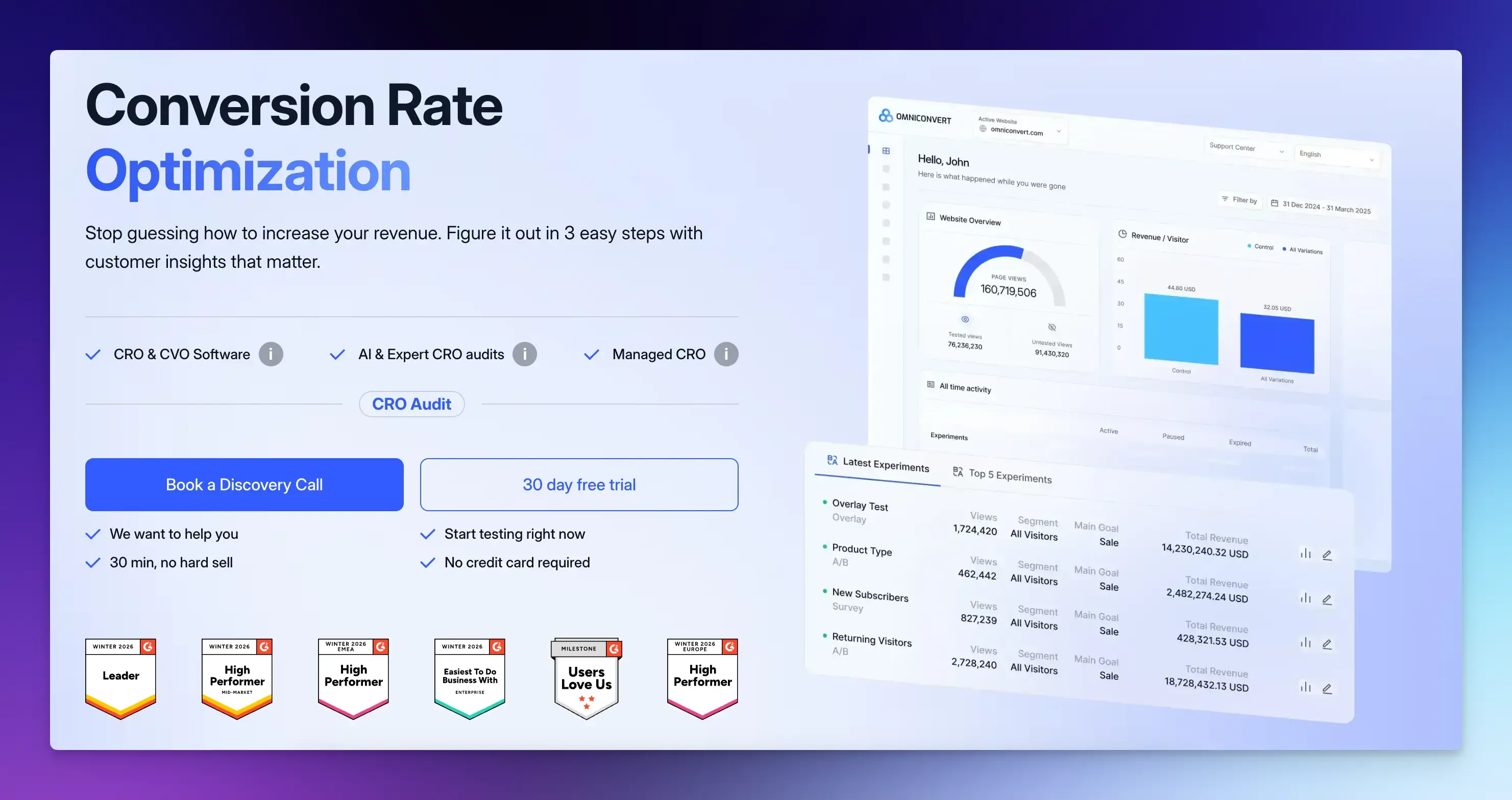
Omniconvert combines conversion optimization tools like A/B testing with advanced customer intelligence and feedback to create a complete optimization workflow.
It turns customer data into actionable insights through three solutions:
- Analytics for understanding customer behavior.
- CRO platform for testing and personalization.
- Customer experience platform for quantitative data and feedback.
Best for: E-commerce teams focused on long-term customer value and segmentation.
Key Features:
- A/B testing and personalization.
- Audience segmentation using behavioral data.
- Funnels, heatmaps, and session recordings.
- Surveys with Net Promoter Score tracking.
- Integration with ad audiences for retargeting.
Pros:
- Combines experimentation with advanced segmentation.
- Great analytics and reporting depth.
Cons:
- Costs can increase with monthly traffic and features needed.
- Full value requires training.
Pricing:
- Free plan available.
- Paid plans start from $245 per month (billed annually).
Unbounce
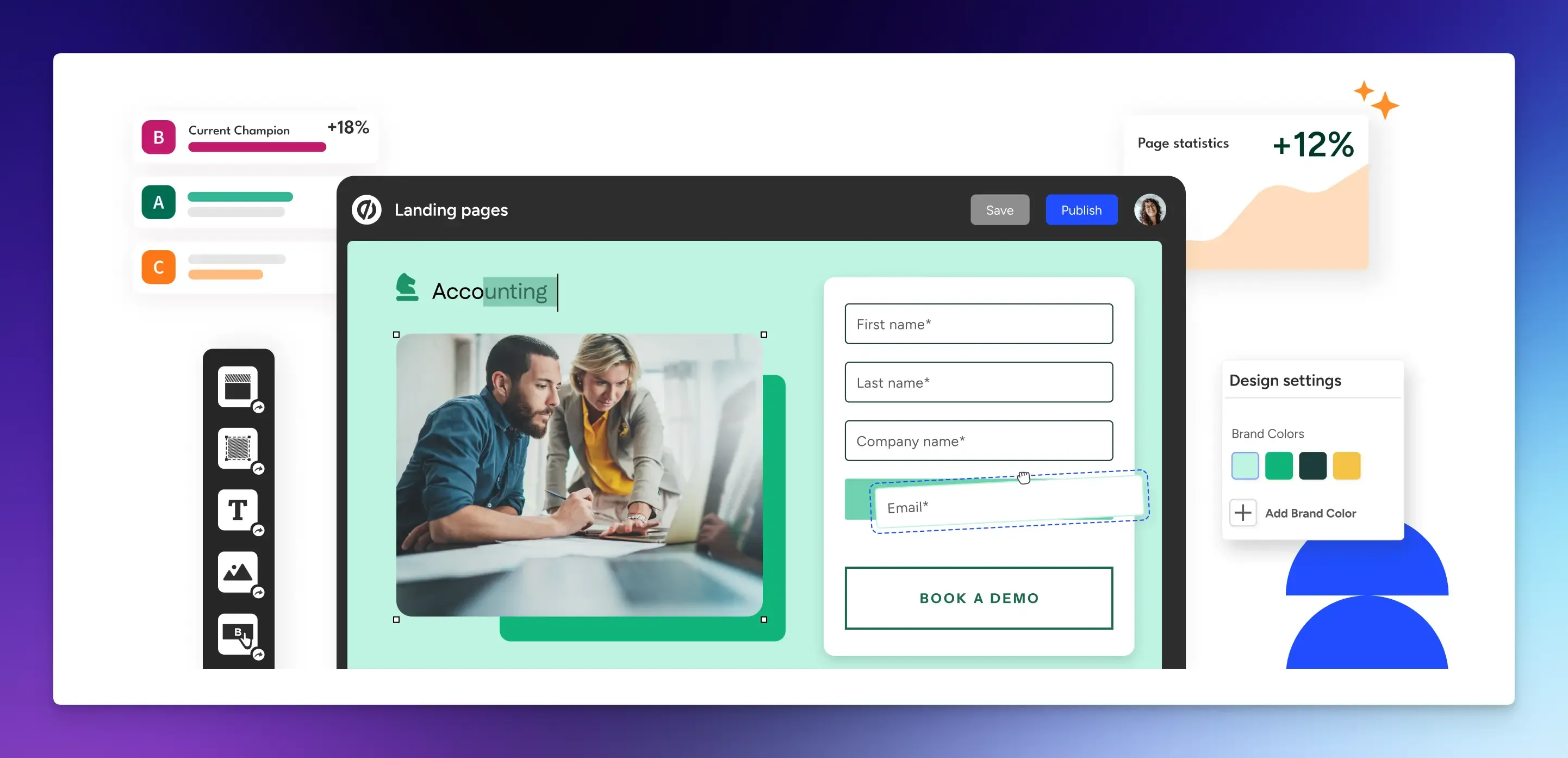
Unbounce is a specialized CRO platform focused on a specific part of your marketing funnel: the landing page.
It allows you to create high-converting pages for your marketing campaigns without writing code, maximizing the return on your paid ads by ensuring the web page people land on is perfectly designed to get them to take action.
Best for: Marketers focused on landing pages and paid campaigns.
Key Features:
- Drag-and-drop landing page builder.
- A/B testing features are built in.
- Popups and sticky bars for lead capture.
- Smart Traffic AI directs visitors to where they’re most likely to convert.
- Connects with major email marketing services, CRMs, and analytics tools.
Pros:
- Makes landing page creation fast and easy.
- AI-powered optimization.
Cons:
- It can be pricey for smaller teams.
- Reporting relies on integrations for deep analytics.
Pricing: Starts at $74 per month (billed annually).
Final Words
The best CRO strategy is to commit fully to learning and improvement rather than looking for a single miracle solution.
The tools listed above can help you truly understand your visitors and build a website that successfully guides them to become loyal customers.
Vemetric stands out for respecting user privacy and making setup simple, even for teams with limited technical expertise.
With this kind of data at your disposal, you can focus on the parts of your website that matter most and measurably improve them.
FAQs
A/B testing compares two versions of an entire page to see which performs better. Multivariate testing compares multiple variations of elements (such as headlines, images, and buttons) on a single page to determine which combination works best.
While high traffic helps achieve better A/B test results, you can begin CRO with lower traffic. The focus for smaller sites should be on using tools like session recordings, heatmaps, and user surveys to identify major usability issues.
Google Analytics is a powerful, free starting point for identifying traffic sources, high exit rates, and funnel drop-off points. But it cannot tell you why it’s happening. For that, you need qualitative insights from behavior analytics tools such as heatmaps and session recordings.
Ready to understand your users?
Start tracking